When I returned to London after thirty years, I realised one thing – London is not just about historic landmarks like the Houses of Parliament, Big Ben or Tower Bridge.
London has many faces.
The first one, and the one most visitors fall in love with, is iconic and historic. Red buses, red telephone boxes, royal palaces and streets filled with that unmistakable London atmosphere.
But the London I knew in the 1990s is long gone. Over the past thirty years, the city has transformed into a modern metropolis filled with glass skyscrapers, new neighbourhoods and places that simply didn’t exist in the London I remembered.
When I compare London then and now, I have to admit that I still prefer its older version a little – without the London Eye, without endless glass towers and without today’s hectic pace.
And yet, there is one transformation that really caught my attention.
The London Docklands.
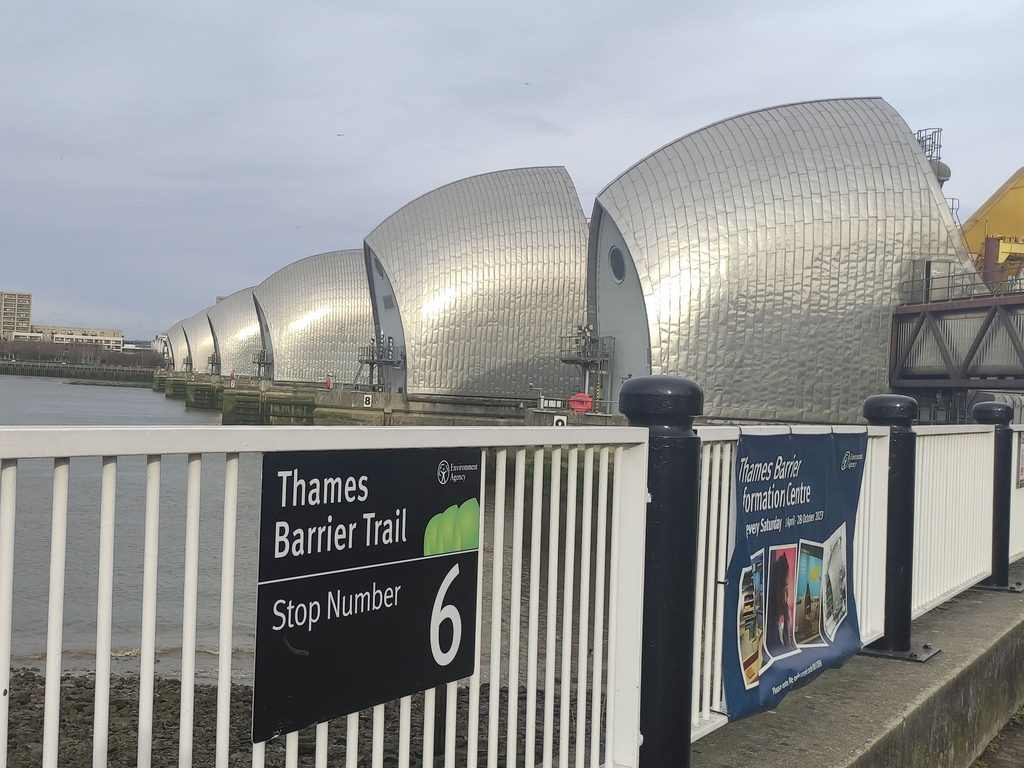
Thames Barrier – A Futuristic Landmark on the Thames
Our journey into modern London began at the Thames Barrier.
This huge structure was built in response to the devastating floods of 1953, when rising water caused widespread damage across London. Its purpose is to protect the city from tidal surges and prevent seawater from reaching central London.
The barrier became operational in 1982 and is still one of the largest movable flood barriers in the world.
At first glance, it looks almost like something from a sci-fi movie – or even Transformers. Huge metal gates rise from the river when the barrier is closed, creating a powerful defence against flooding. The design of the silver domes is surprisingly timeless, and the technology was truly remarkable for its time.
The barrier is tested regularly, so if you are interested in engineering and technology, it is worth planning your visit around one of the testing periods.
You can find more information about visiting the Thames Barrier here.
A Walk Along the Thames – A Side of London Many Tourists Miss
From the Thames Barrier, we continued on foot along the river towards North Greenwich Station.
It is about a 1.5-kilometre walk along the Thames Path, a marked trail following the river.
And this part of London was perhaps even more enjoyable for me than the crowded tourist spots in the city centre.
Here, you discover a completely different side of London:
- remnants of the old docks,
- modern residential buildings,
- industrial corners,
- street art,
- hardly any tourists.
It feels like a different London – at times almost slightly industrial or even post-apocalyptic. A place where you can still sense the history of the Docklands.
I recommend bringing some water with you, as there are not many places to stop for refreshments along the way.
And if you don’t feel like walking the entire route, you can shorten the journey by taking a bus for part of the way.
Canary Wharf – A City of the Future Among the Old Docks
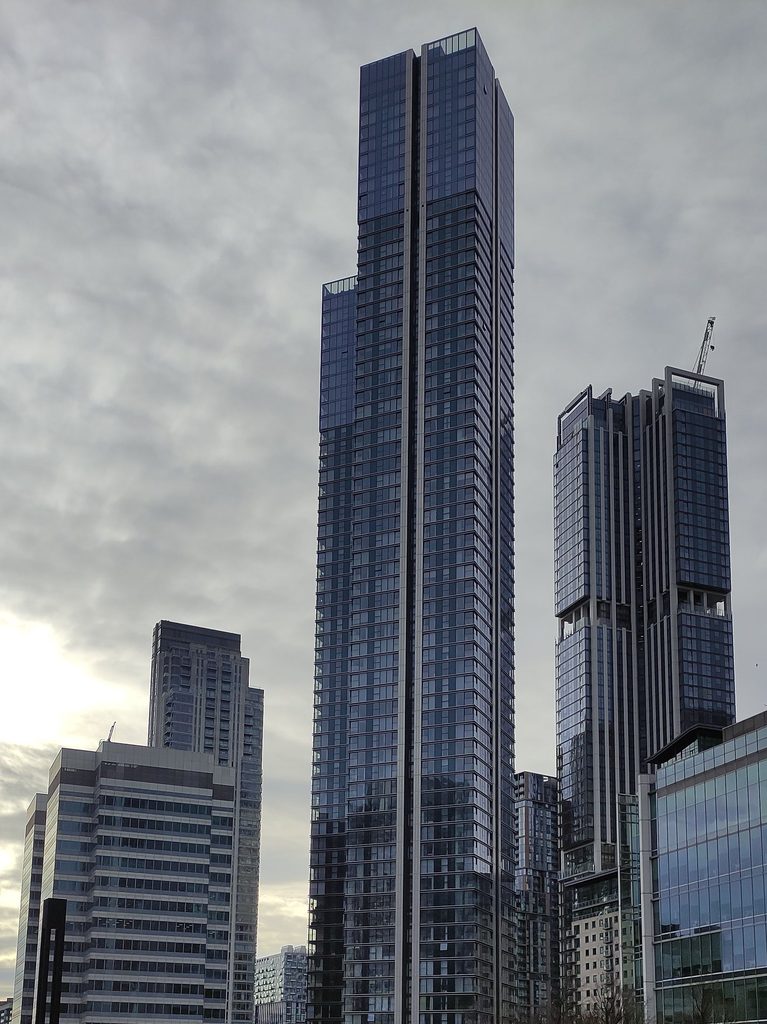
And then came the contrast that really surprised me.
Canary Wharf.
A place that today feels like a futuristic city filled with skyscrapers, glass, water and bridges.
We visited on a Saturday in January around midday, and what greeted us was almost complete emptiness. Something you don’t see very often in London.
After the hustle and bustle of the city centre, it was probably the quietest place we visited during our entire trip.
Canary Wharf is incredibly photogenic. You’ll find modern architecture, sculptures, light installations and contemporary art. I recommend taking your time and simply wandering along the waterways.
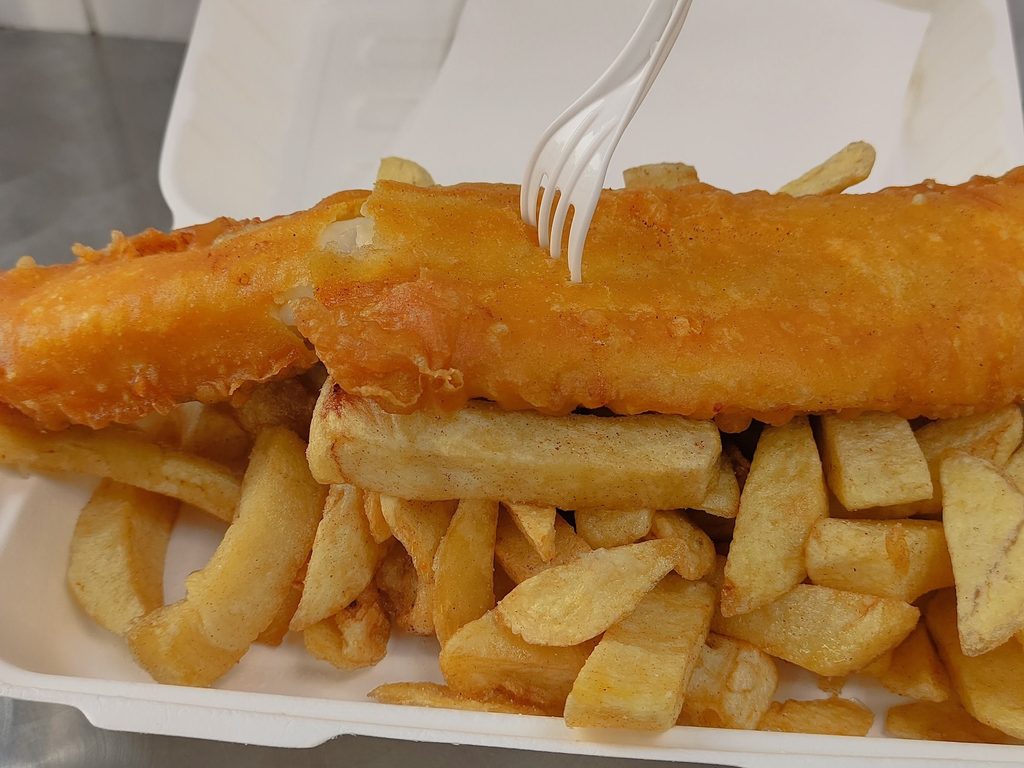
And yes – we even found some fish and chips here.
I was secretly hoping to find the classic fish and chips served in a paper cone, just as I remember them from thirty years ago. Sadly, even local Londoners confirmed that this tradition has almost disappeared.
How London’s Docks Became a European Financial Centre
Walking through Canary Wharf, it is almost hard to believe that this was once home to some of the busiest docks in the world.
For almost two centuries, ships arrived here carrying cargo such as coffee, sugar, rum and timber. The Isle of Dogs was at the heart of London’s trade and industry.
The West India Import Docks opened as early as 1802, and it was trade that gave this part of London its importance. The name Canary Wharf came from the fruit and vegetable trade with the Canary Islands.
With the rise of container shipping, however, the docks gradually lost their importance. Their decline began in the 1960s and 1970s, and most of the docks eventually closed in 1980.
But instead of disappearing completely, the area underwent a remarkable transformation.
In 1987, the Canary Wharf project was launched – one of the largest urban regeneration projects in Europe. Its landmark became One Canada Square, a skyscraper that symbolised London’s ambition to become one of Europe’s leading financial centres.
Historical source: Chelsea Construction Consultancy – The Continued Evolution of the London Docklands through to 1990 when it became Canary Wharf, 2021.
What Surprised Me Most?
What surprised me most was probably how naturally two completely different faces of London can exist side by side.
The old docks, where trading ships once moored, now stand alongside glass towers belonging to global companies.
History hasn’t disappeared. It has simply been given a new look.
And perhaps that is exactly what makes London so fascinating. It is constantly changing, yet layers of its past are still there, waiting to be discovered.
Napsat komentář