When I tell people that Olomouc is a bit like a small Prague, they sometimes look at me as if I have lost my mind.
But spend a little time walking around Olomouc and you may understand what I mean.
We have a historic city centre, beautiful churches, palaces, towers, fountains, an astronomical clock, a university, an archbishopric and even a UNESCO World Heritage Site.
The difference?
Everything is on a much smaller, more intimate scale.
And that is exactly what makes Olomouc so special.
A historic university city
Olomouc is a university city, and the students give it a lively and relaxed atmosphere. History is everywhere, but this is not a city that feels like an open-air museum.
Olomouc has been an important centre of Moravia for centuries. A bishopric was established here as early as 1063, and in 1777 it was elevated to an archbishopric.
The connection with the archbishopric is still very visible today. The city is home to the Archbishop’s Palace, St Wenceslas Cathedral and a number of other important ecclesiastical buildings.
And the history of the archbishopric is closely connected with major European events. In 1848, for example, Franz Joseph I became Emperor of Austria in the Archbishop’s Palace in Olomouc.
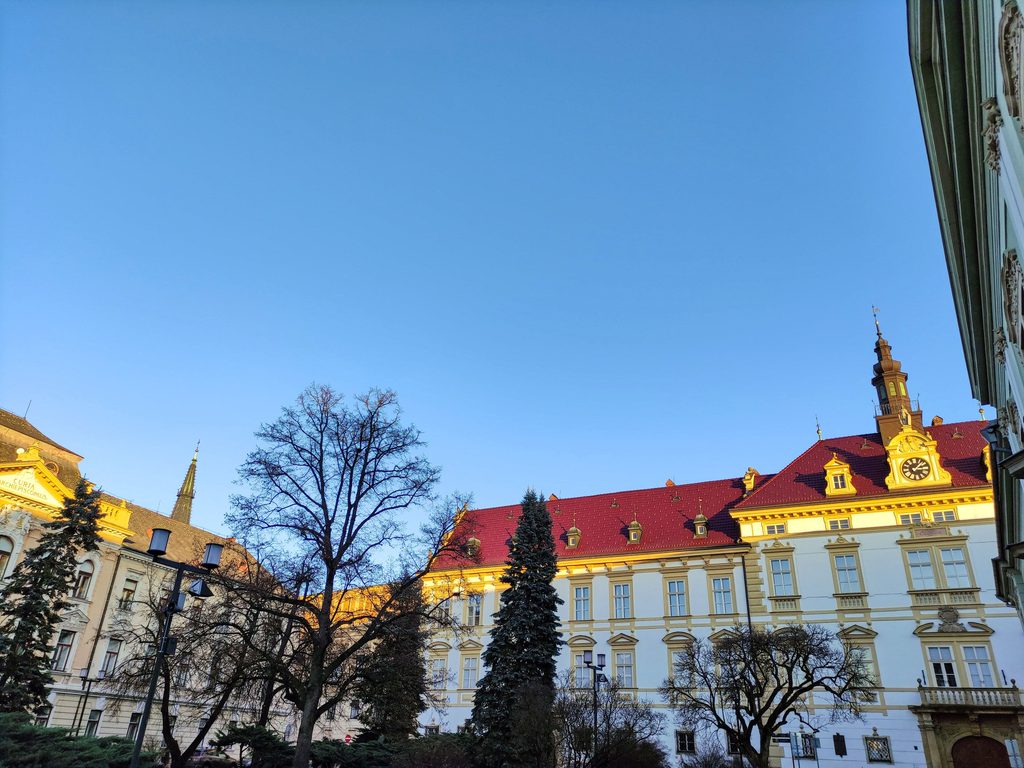
Horní Square – the heart of Olomouc
If I had to choose just one place to start exploring Olomouc, it would probably be Horní Square.
This is where you will find the Town Hall, the astronomical clock, Renaissance houses and palaces, several fountains and, most importantly, the magnificent Holy Trinity Column.
The column has been on the UNESCO World Heritage List since 2000. It is considered the largest group of Baroque statues within a single sculptural monument in Central Europe. It has recently been carefully restored, bringing its intricate details and sculptures back to life.
And this is where my comparison with Prague really begins.

Yes, Olomouc has an astronomical clock too
You may be surprised to learn that Olomouc has its own astronomical clock.
It is located on the northern façade of the Town Hall and has a long history. But don’t expect something that looks exactly like Prague’s famous medieval clock.
The present appearance dates from the post-war period. The original clock was badly damaged during the fighting in May 1945 and was rebuilt in the late 1940s and early 1950s by artist Karel Svolinský.
The result reflects the official artistic style of the time – Socialist Realism. Its mosaic includes scenes of everyday work and Moravian folklore, including the Ride of the Kings.
So yes, Olomouc has an astronomical clock like Prague.
But ours definitely has its own story.
The clock plays once a day at noon.
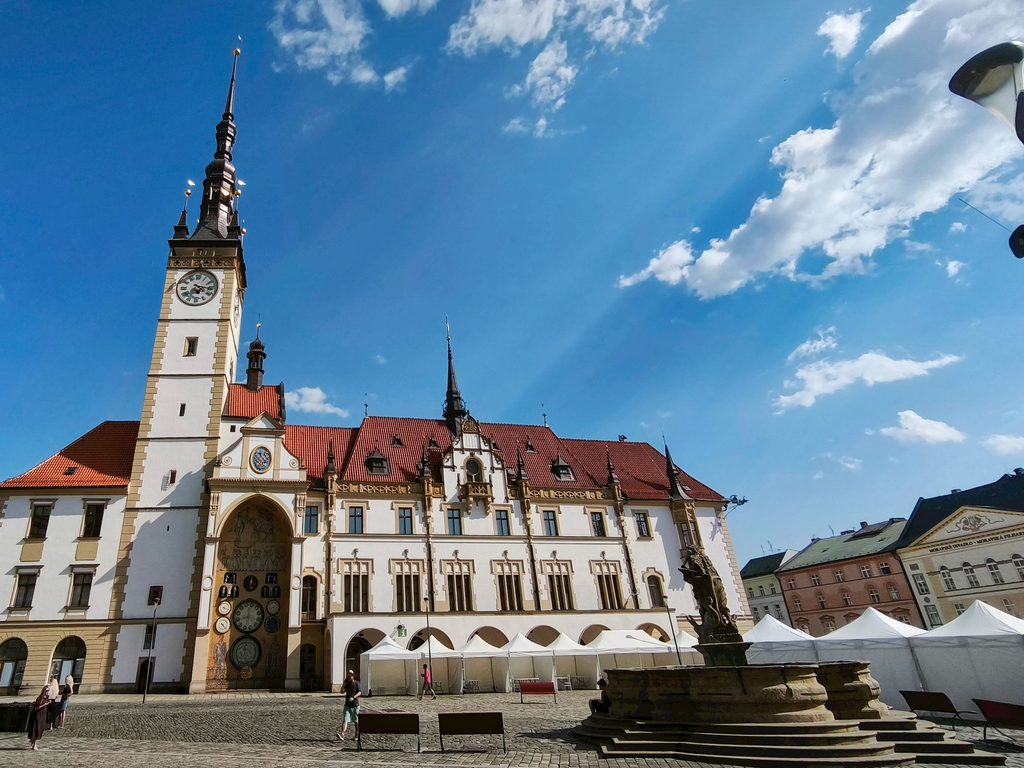
Trams once crossed the square
Today, Horní Square feels peaceful and pedestrian-friendly.
It is hard to imagine trams passing between the historic buildings, but that is exactly what happened.
The square was once an important meeting point for Olomouc’s tram network. Because the original tram lines were single-track, trams even had to pass each other at designated passing points – and Horní Square was one of them.
The trams finally disappeared from the square in 1954.
Today, when there is no event taking place, Horní Square can be surprisingly quiet.
You can simply wander around, admire the architecture and enjoy the atmosphere.
There is just one little warning:
The cobblestones are not exactly the easiest surface for walking.
But perhaps that is part of their charm.
Renaissance houses, palaces and fountains
Look beyond the main landmarks and you will discover plenty of smaller details.
One of them is Edelmann Palace, a Renaissance building created in the 16th century by joining two Gothic houses. Its richly decorated façade is one of the reminders of Olomouc’s Renaissance past.
And then there are the fountains.
Olomouc is famous for its collection of Baroque fountains inspired by ancient mythology. On Horní Square you can see, among others, Caesar’s Fountain and Hercules‘ Fountain.
And then there is one that is completely different.
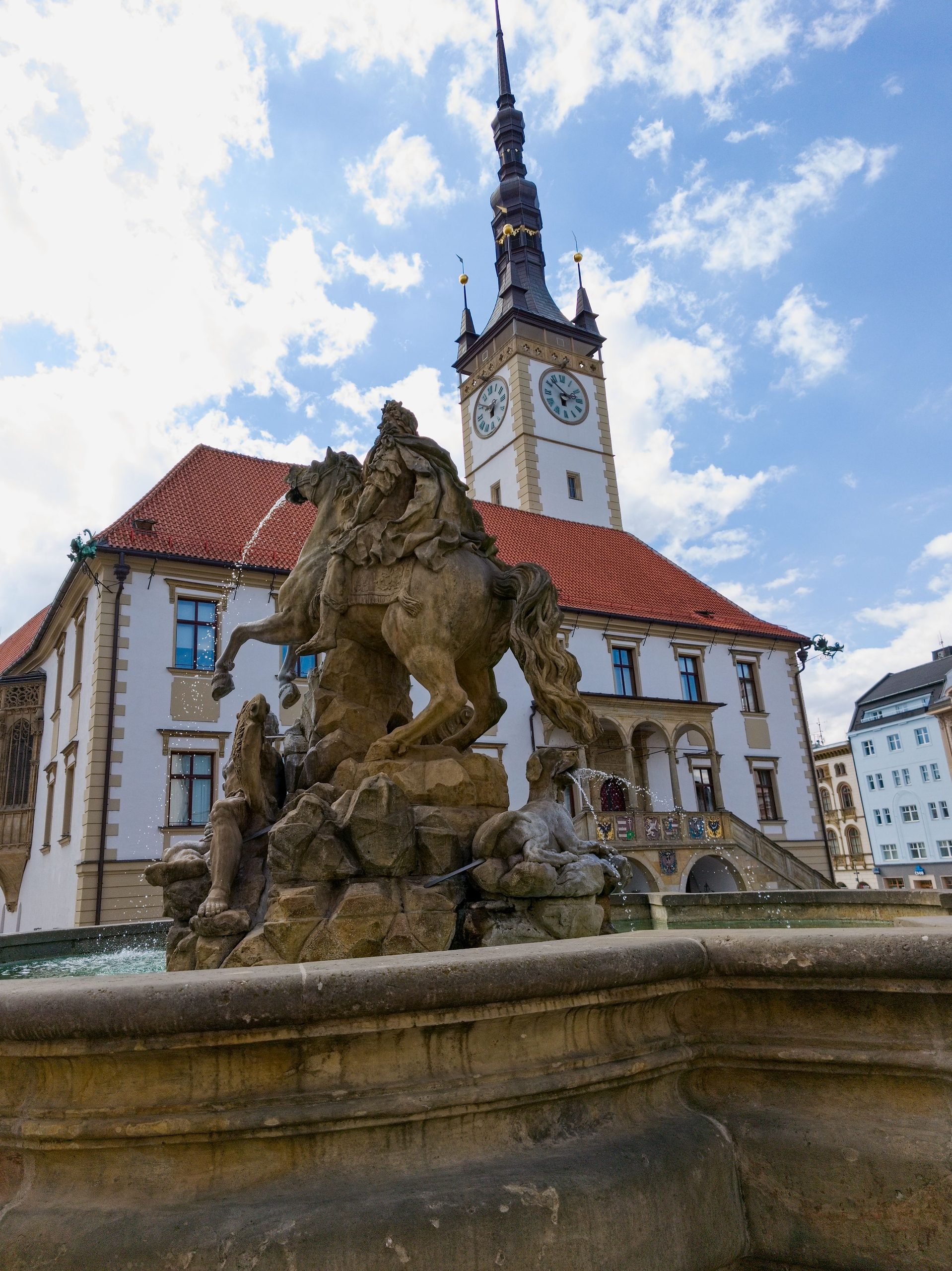
The Arion Fountain and the turtle children love
The Arion Fountain was created in 2002 as part of the reconstruction of Horní Square. It was designed by Ivan Theimer, a sculptor born in Olomouc.
And yes – there is a large turtle.
In fact, there are several turtle elements in the fountain, making it particularly popular with children.
But the fountain has another special feature.
During the summer season, it can literally burst into bloom.
The city works with Flora Olomouc to create large floral arrangements around the fountain. The colours change during the season, so one visit might bring blue and white flowers, while another might be filled with pink, purple or yellow.
And there is a reason why flowers are such a big part of Olomouc’s identity.

Olomouc – the city of flowers
Flora Olomouc has been part of the city’s story since 1958 and has become one of the best-known gardening and flower exhibitions in the Czech Republic. It takes place in spring and autumn and has helped make Olomouc known as a city of flowers.
The connection between the city and flowers goes beyond the exhibition grounds. Floral installations regularly appear in the historic centre, including the Arion Fountain.
It is one of those little details that makes Olomouc feel different from other Czech historic cities.
Churches and towers everywhere
Prague is famous for its hundreds of towers.
Olomouc obviously cannot compete with that number.
But walk through the historic centre and you will soon realise that church towers and spires are everywhere.
The most impressive is probably St Wenceslas Cathedral. Nearby you can also find St Maurice’s Church, St Michael’s Church, the Church of Our Lady of the Snows and many other historic churches.
Because so many of these buildings are concentrated in a relatively small area, Olomouc can feel surprisingly monumental.
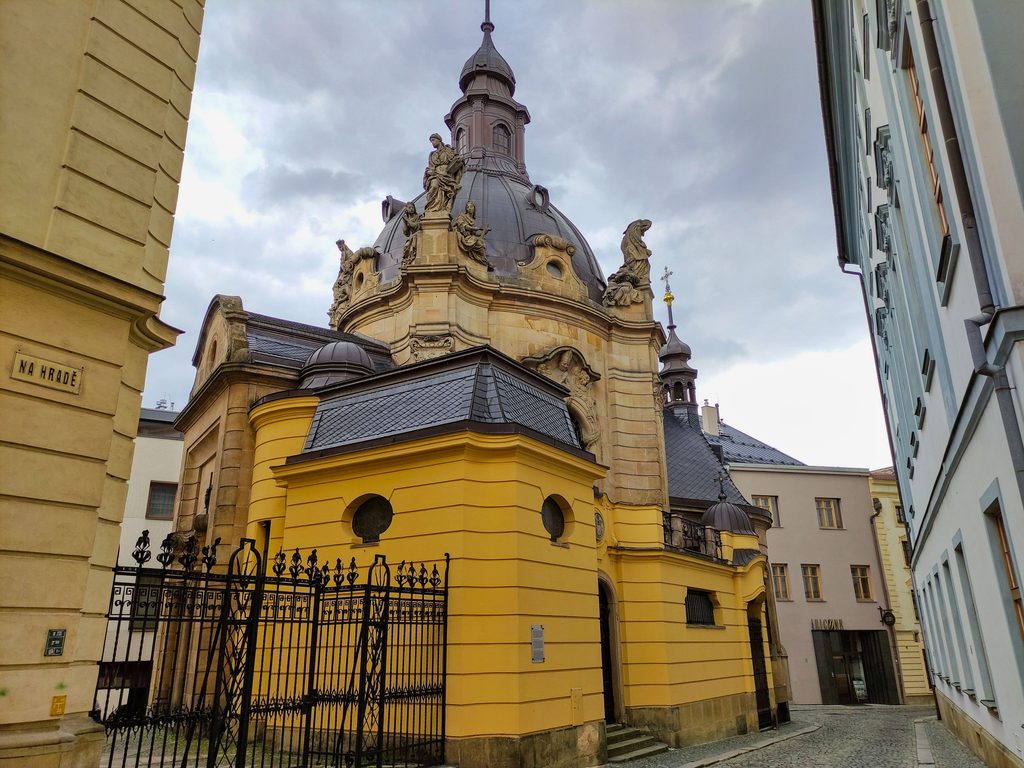
Czech Kings Walked Through Olomouc Too
Olomouc was not only an important Moravian city. Czech kings also passed through its streets.
One of them was Wenceslas III, the last male member of the Přemyslid dynasty. His life came to a tragic end in Olomouc. On 4 August 1306, he was murdered at what is now Wenceslas Square. His death marked the end of the Přemyslid dynasty in the male line, a dynasty that had ruled the Czech lands for more than four centuries.
Today, as you walk through Wenceslas Square near the Cathedral of St Wenceslas, it is easy to overlook the fact that this was the scene of an event that changed the course of Czech history.

Olomouc is more than its historic centre
And this is where I think Olomouc becomes even more interesting.
After exploring the historic centre, you don’t have to move from one monument to another all day.
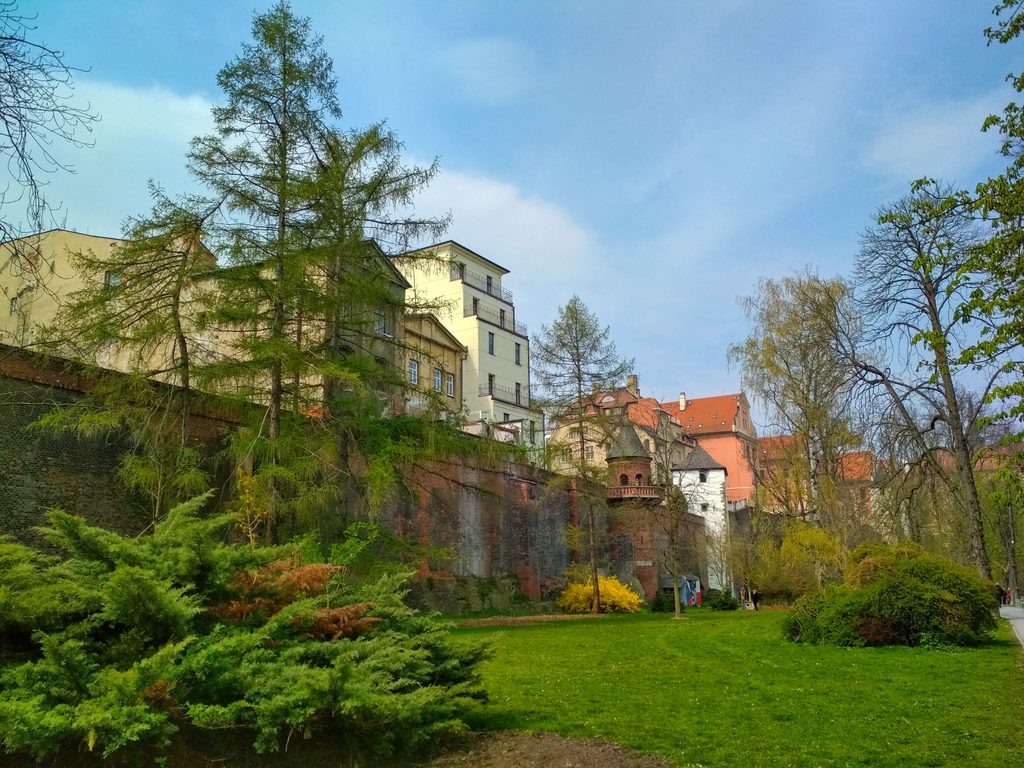
Olomouc has beautiful parks surrounding the centre, including Bezručovy Sady, Smetana Gardens and Čech Gardens.
And then there is the Morava River.
The river and its embankment offer a completely different side of the city. It is a lovely place for a walk, especially when you want a break from sightseeing.
You can go from historic streets and Baroque fountains to greenery and the river within a short walk.
That combination is one of the things I love about Olomouc.
So, why visit Olomouc?
Because you can find a little bit of everything here.
Historic architecture.
UNESCO.
An astronomical clock.
Baroque fountains.
Churches and towers.
An archbishop’s palace.
A university and student atmosphere.
Beautiful parks.
The Morava River.
Cafés.
And centuries of history hidden behind the buildings.
But without the scale and crowds of Prague.
For me, Olomouc is one of the hidden gems of the Czech Republic.
It is a city that many international visitors still overlook. And perhaps that is exactly why it is so enjoyable to explore.
It is well connected by railway and easy to reach from other parts of the Czech Republic. For international visitors, the airports in Brno and Ostrava are also within reasonable reach.
So the next time you are looking for a Czech city full of history, architecture and atmosphere, you don’t necessarily have to head straight to Prague.
Give Olomouc a chance.
You might discover that this little Prague has a character all of its own.
Want to discover Olomouc in more detail?
I’m preparing a practical guide to Olomouc and the surrounding area, with detailed itineraries, maps and tips for day trips. If Olomouc has caught your interest, follow Explore with Iveta – the guide will be available right here soon.
Napsat komentář